
Nova gives retired EV batteries a second job powering buildings
Moment Energy’s new commercial storage system repurposes suitable EV packs, with North American deliveries planned for early 2027. NZ availability remains unconfirmed.
An EV battery can retire from driving without being ready to retire from work.
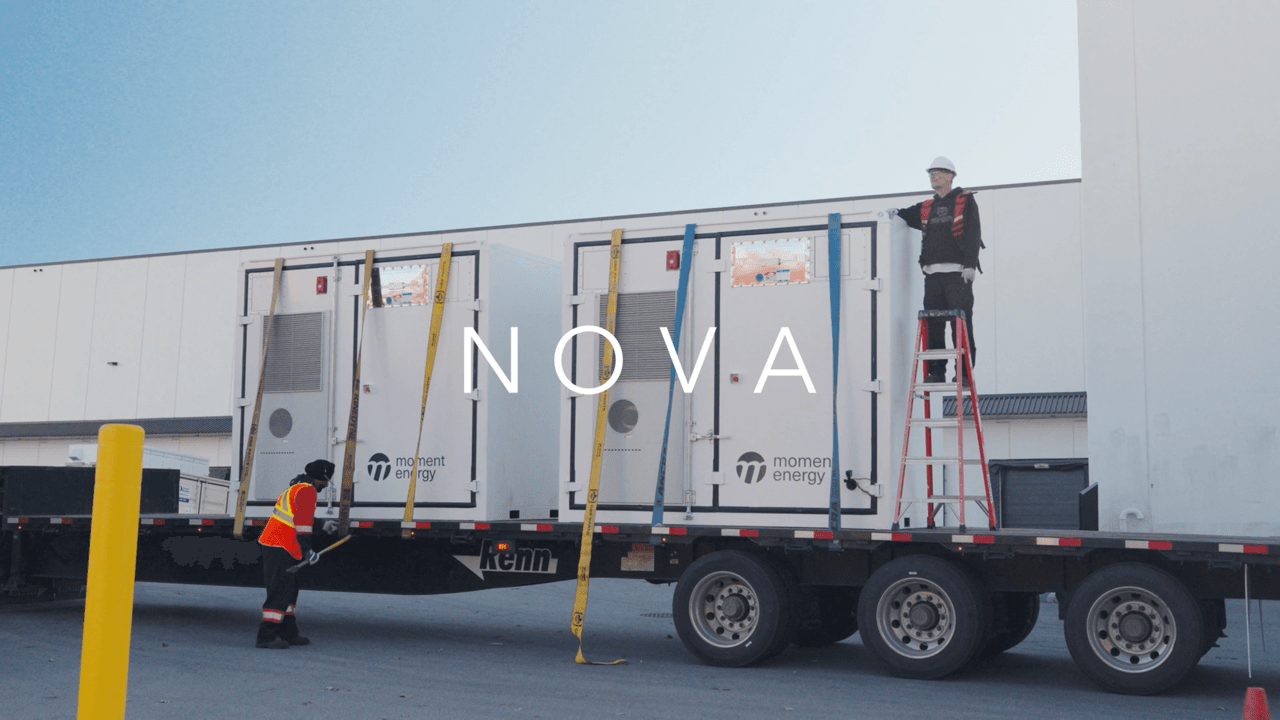
Moment Energy’s new Nova storage system is built around that distinction. Unveiled on 17 November, it repurposes EV batteries for commercial energy storage, giving suitable packs another job after their time in a vehicle.
The company says Nova is in production in North America, with first deliveries planned for the first quarter of 2027. Its published market coverage is the United States, Canada and Mexico. A New Zealand launch has not been confirmed.
The relevance for Kiwi EV buyers is the broader question behind the product: what happens to a battery when it no longer meets the requirements of the car it came from?
A different job for an ageing pack
A car needs to carry its battery everywhere. Capacity, mass and the range between charging stops all matter to its usefulness.
A stationary system has a different task. It can sit beside a building, storing electricity for later use, without having to propel itself down the road. That makes a second application possible, but does not make every used battery suitable.
Moment Energy’s repurposing process starts with testing and recording a pack’s state of health. Packs are graded before being rebuilt into stationary storage.
The company says it accepts suitable, intact lithium-ion packs with their original battery management systems and connectors, typically at roughly 70 per cent state of health or above. It explicitly excludes damaged, defective or recalled batteries.
That is an important qualification. “Second life” means assessed and engineered for another application, rather than simply connecting an unwanted pack to a building.
How much energy are we talking about?
According to the Nova specifications, each block has a rated capacity of 500kWh and maximum power of 200kW.
The two figures describe different things. Kilowatt-hours measure stored energy; kilowatts describe the rate at which power can be delivered. The distinction is much like battery capacity versus motor output in an EV.
Dividing 500kWh by 200kW gives a theoretical 2.5 hours at that output. That simple calculation ignores operating reserves, conversion losses and site conditions, so it is not a guaranteed backup duration.
Replace the packs, keep the installation
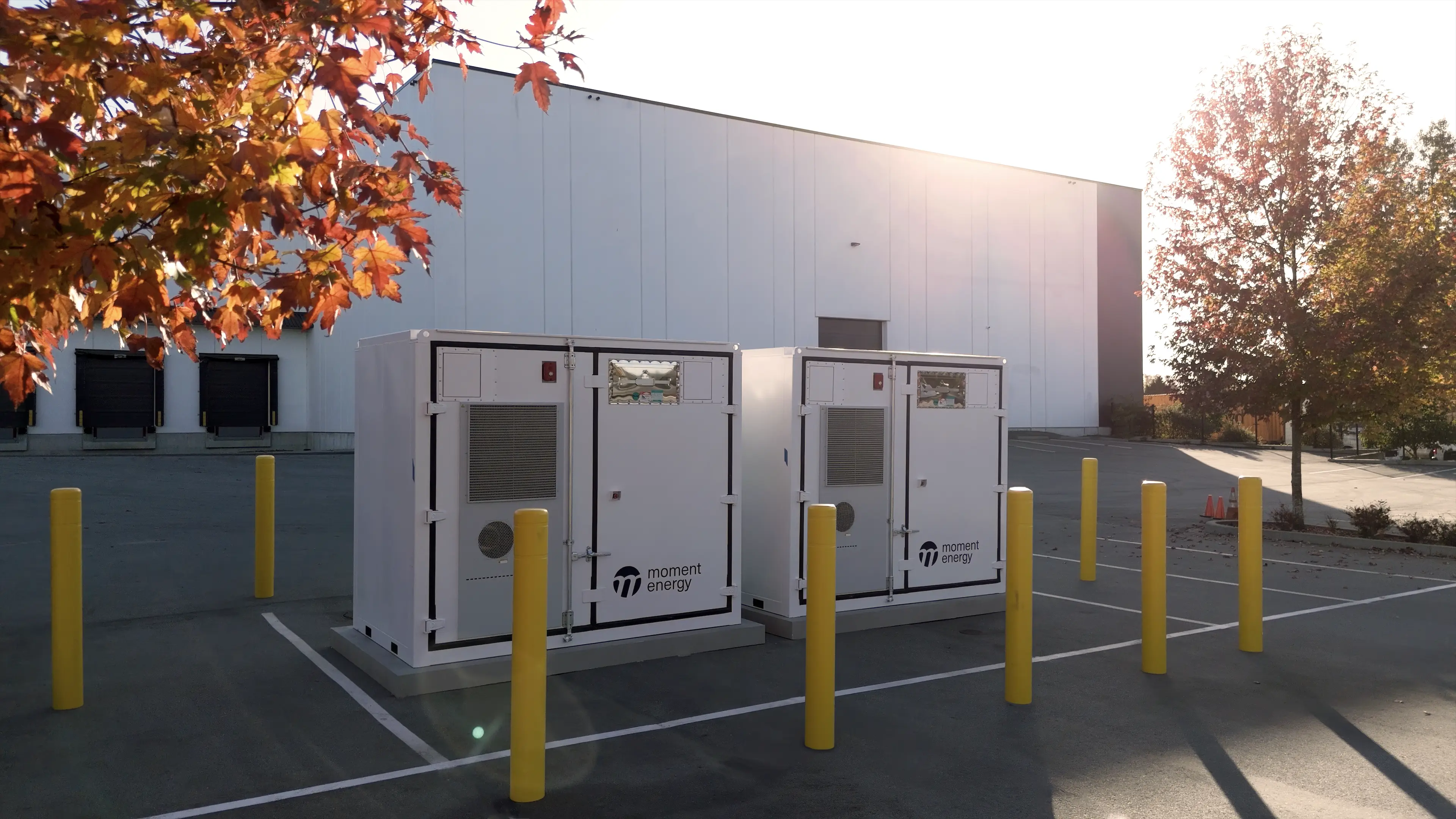
Nova’s design allows packs to be replaced as they age while retaining the enclosure and other infrastructure. Moment Energy links its claim of a system life exceeding 20 years to ongoing pack replacement and capacity-augmentation services.
That is a system-life proposition, not a promise that every original EV battery lasts for two more decades.
The manufacturer also reports UL 1973 and UL 9540 certification, alongside testing to UL 9540A. These relate to the North American product and its safety evaluation; they do not establish approval for an NZ installation.
Could old EV batteries help charge the next fleet?
Moment Energy’s description of commercial uses includes supplying fleet chargers, shifting electricity use away from demand peaks and storing solar energy for later.
For a depot, storage can potentially supply part of a short charging peak while drawing electricity more steadily from the grid. It still needs to recharge, so it does not remove the site’s overall energy requirement.
The NZ takeaway is a credible route for extending the useful service of suitable batteries, rather than a guaranteed resale value for an individual owner’s pack. Local collection, assessment, installation and support would all need to exist before an overseas product became a practical option here.
Explainer · Spotted an error? Tell us. Read our editorial policy.
Related stories

Explainer
Addionics tackles battery ageing by changing the metal inside the cell
Overseas announcementNew laboratory results put porous current collectors in the spotlight, with implications for future EV battery development.
CarWatch Admin ·
Explainer
Niron’s US$1.8b factory plan puts rare-earth-free EV magnets in focus
Overseas announcementIron-nitride magnets offer another route away from rare earths in electric motors. Niron's new US factory remains a future project, with no NZ vehicle application announced.
CarWatch Admin ·

News
Japan shipping pause complicates used EV imports for 2027, with Leaf exception
NCC says Wallenius Wilhelmsen’s year-long Japan-to-Oceania pause leaves container shipping as its current option for used BEVs other than the Nissan Leaf. Extra costs remain vehicle-specific.
CarWatch Admin ·
News
Volkswagen’s 270kW ID. Polo GTI Clubsport is a concept with a clever motor swap
Overseas announcementVolkswagen’s electric GTI show car puts the APP550 motor up front and pairs it with a reworked 52kWh battery system. Production and NZ availability are unconfirmed.
CarWatch Admin ·